Professional TrailBuilders Conference || Oceania Edition
Proceedings
Tuesday, December 9 - Thursday, December 11, 2025
The Inaugural PTBA Oceania Conference
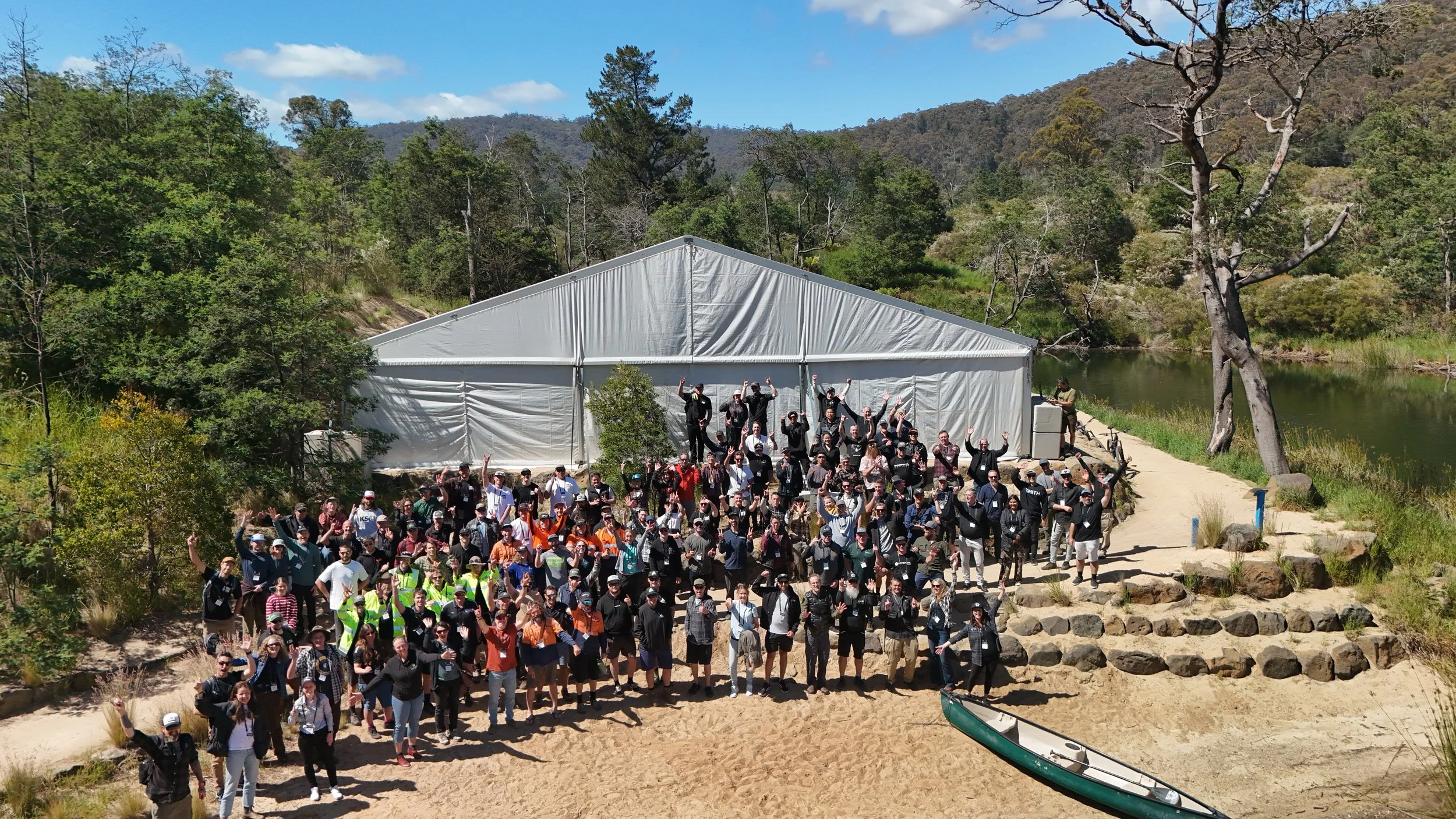
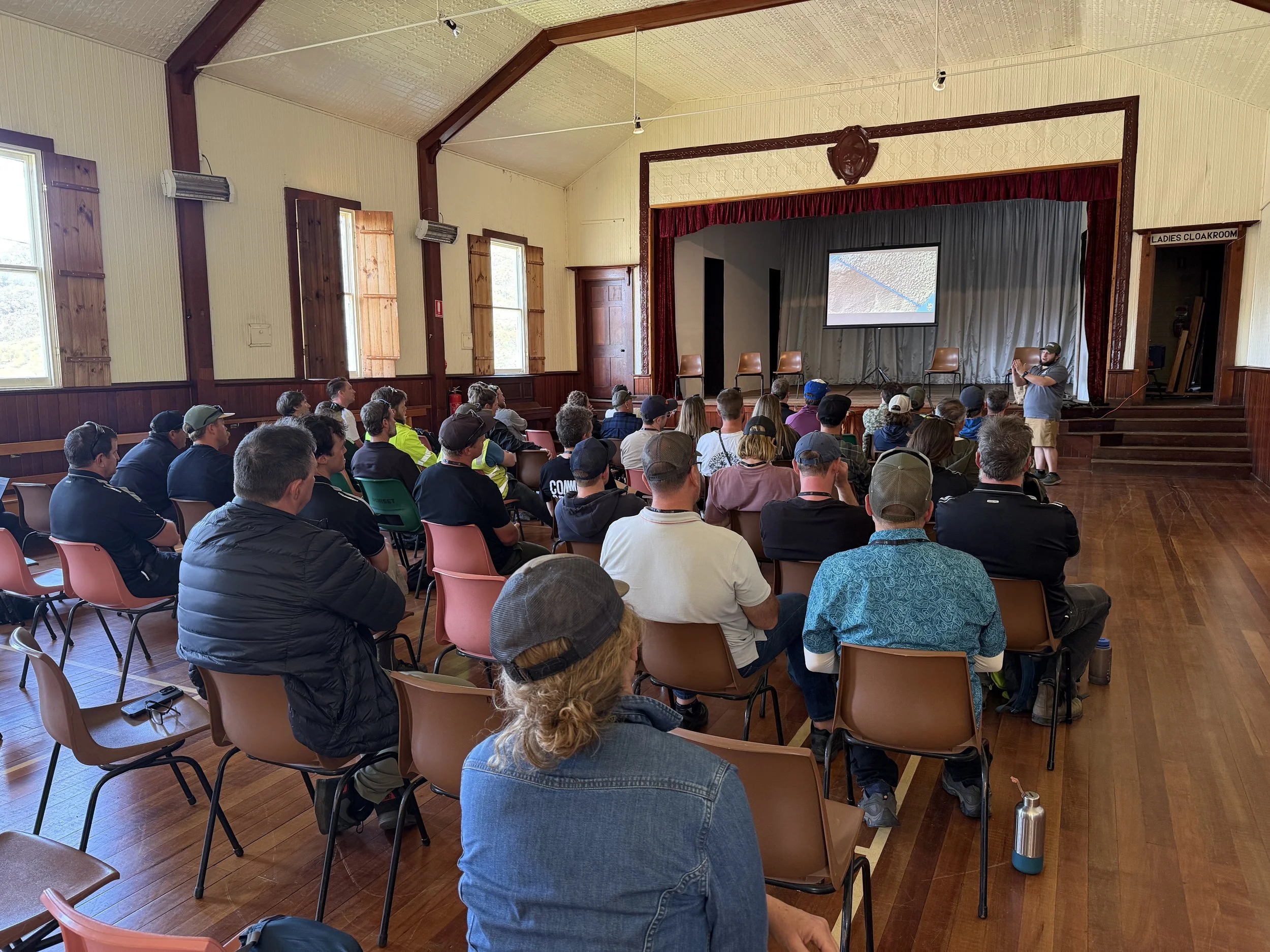
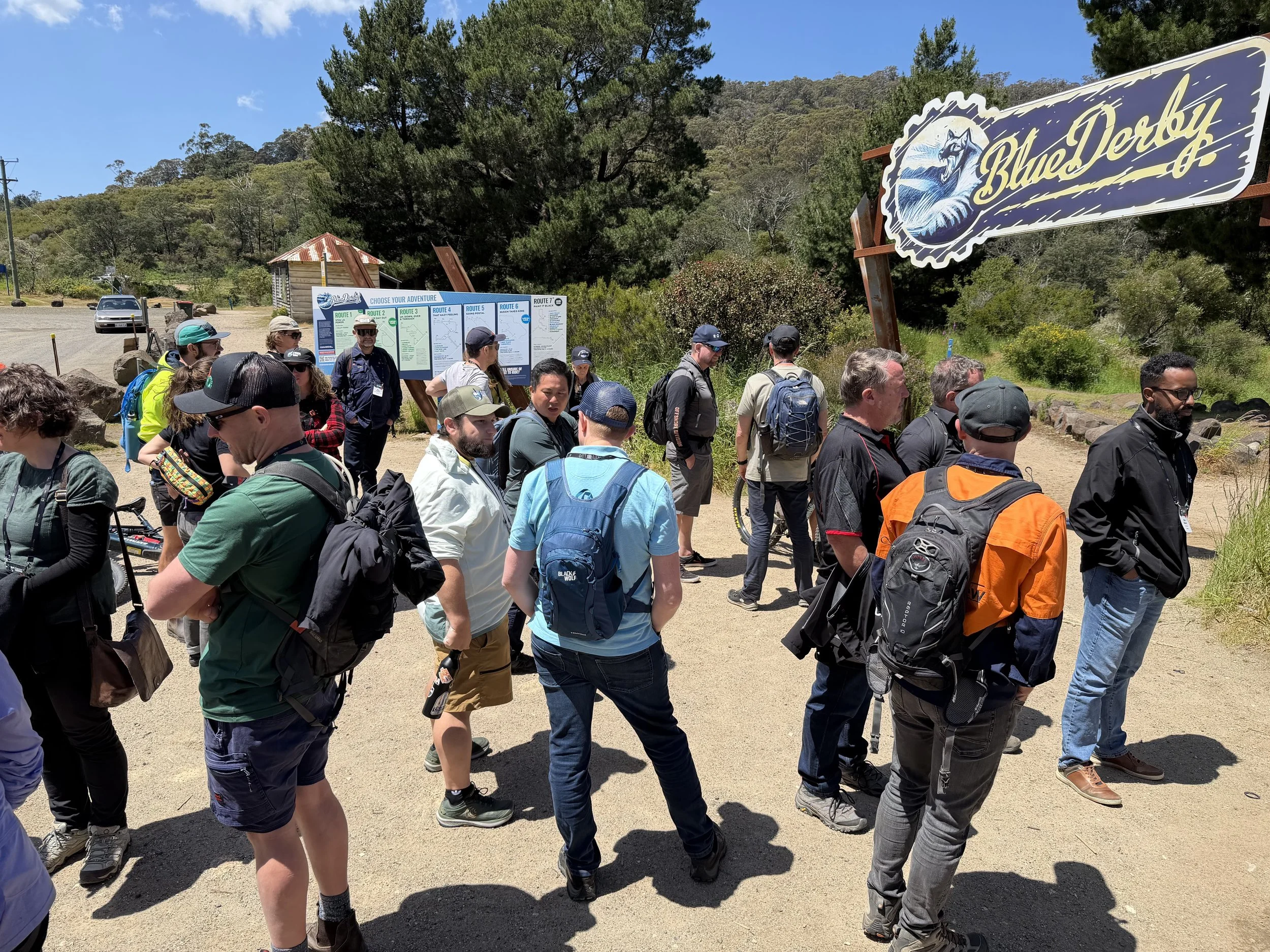
The inaugural PTBA Oceania Conference, held in Derby, Tasmania, brought together more than 150 trail professionals from across Australia, Asia, and North America, representing the full spectrum of the trail industry. Hosted in one of the world’s leading trail towns, the conference combined classroom learning, field sessions, and on-trail experiences, offering both practical education and inspiration grounded in place. Participants left Derby energized and motivated to continue advancing professionalism, collaboration, and innovation across the trail industry in Australia, Oceania, and around the world.
These proceedings capture the shared knowledge and resources from the Oceania Conference, including downloadable presentations and session summaries. We hope this archive serves as a valuable reference and inspiration for your ongoing work in creating accessible, sustainable, and inclusive trail systems. A hyperlink indicates that there was a presentation and the speaker shared it for publication in these proceedings. Additional information about the conference is available on the conference website.
Tuesday, December 9
Opening Sessions
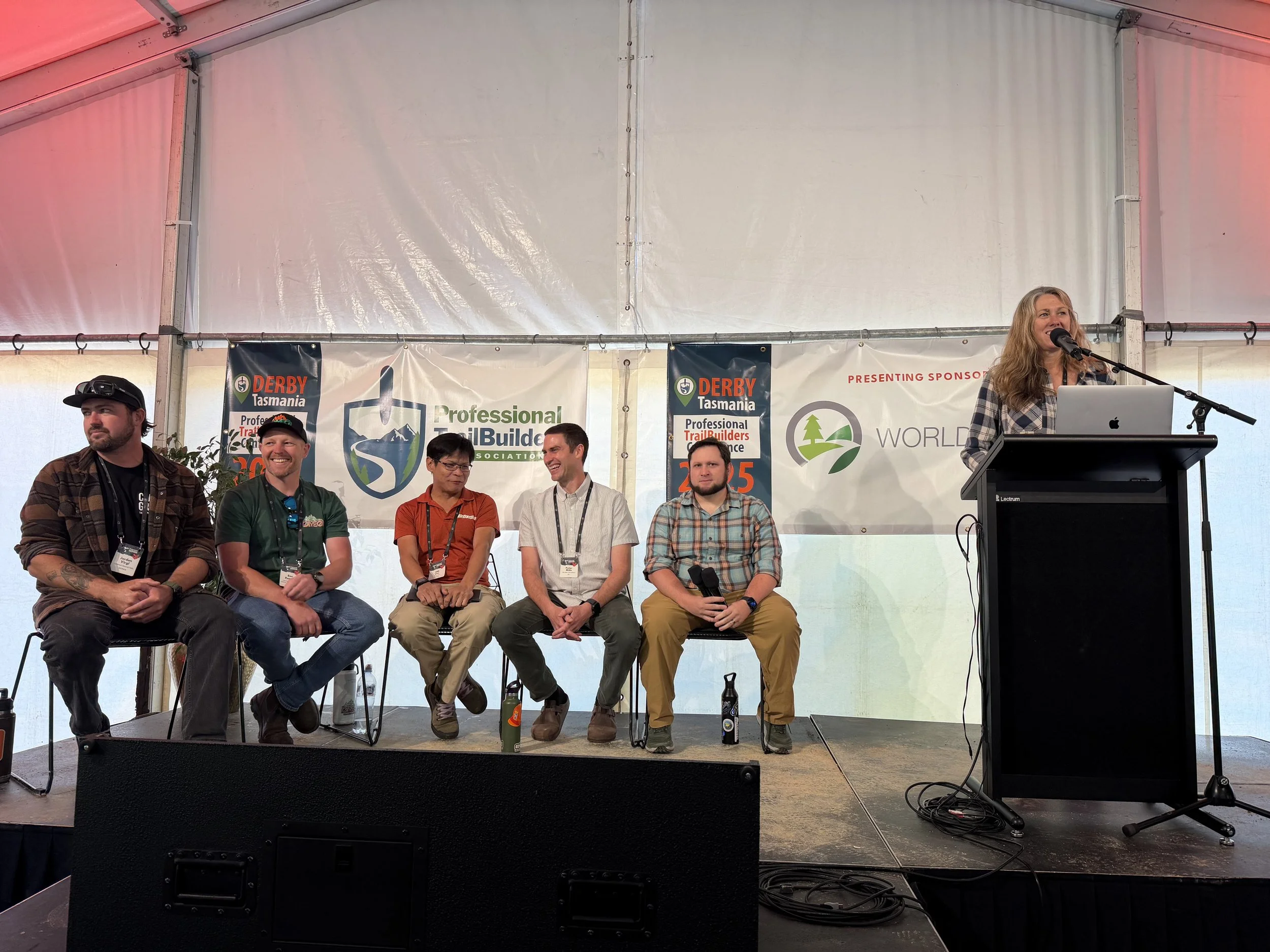
Welcome to Derby and Opening Remarks
Speakers: Aaryn Kay, PTBA; Mayor Rhys Beattie, Glen Jacobs, World Trail
The Making of Derby — Vision, Process, and Partnerships
Speakers: Chris Cafe, Blue Derby Mountain Bike Trails; Glen Jacobs, World Trail; Pete Coleborn, Dorset Council
Derby, Tasmania, stands as a powerful example of how trails can transform a community. From an initial idea fueled by local advocacy, through high-level planning and political support, to world-class trail design and construction, Derby has become an internationally recognized destination. This opening plenary highlighted why we’ve come to Derby for the conference: to learn from their story and see first-hand how vision, partnerships, and on-the-ground implementation can shape a trail system with lasting global impact. A facilitated Q&A followed the presentation, offering participants the chance to engage directly with the team behind Derby’s success.
Inside the Derby Trails — Design, Construction, and Maintenance Lessons
Speakers: Glen Jacobs, World Trail; Pete Coleborn, Dorset Council
We’re trailbuilders, and we’re here to talk about the dirt. Before hitting the trails, participants will explore Derby’s network as a living classroom for trail excellence. This session dug into the design principles, construction specifications, and maintenance strategies that make these and other trails world-class. Through the perspectives of both the builder and the land manager, Glen Jacobs and Pete Coleborn unpacked how intentional design and long-term planning drive Derby’s success—and what these lessons can teach us about creating resilient, fun, and sustainable trail systems worldwide. A facilitated Q&A followed to continue the conversation and dive deeper into the details on the ground.
Field Sessions
Field-Based Learning: Adjustable Rock Matting (ARM) Demonstration
World Trail Team
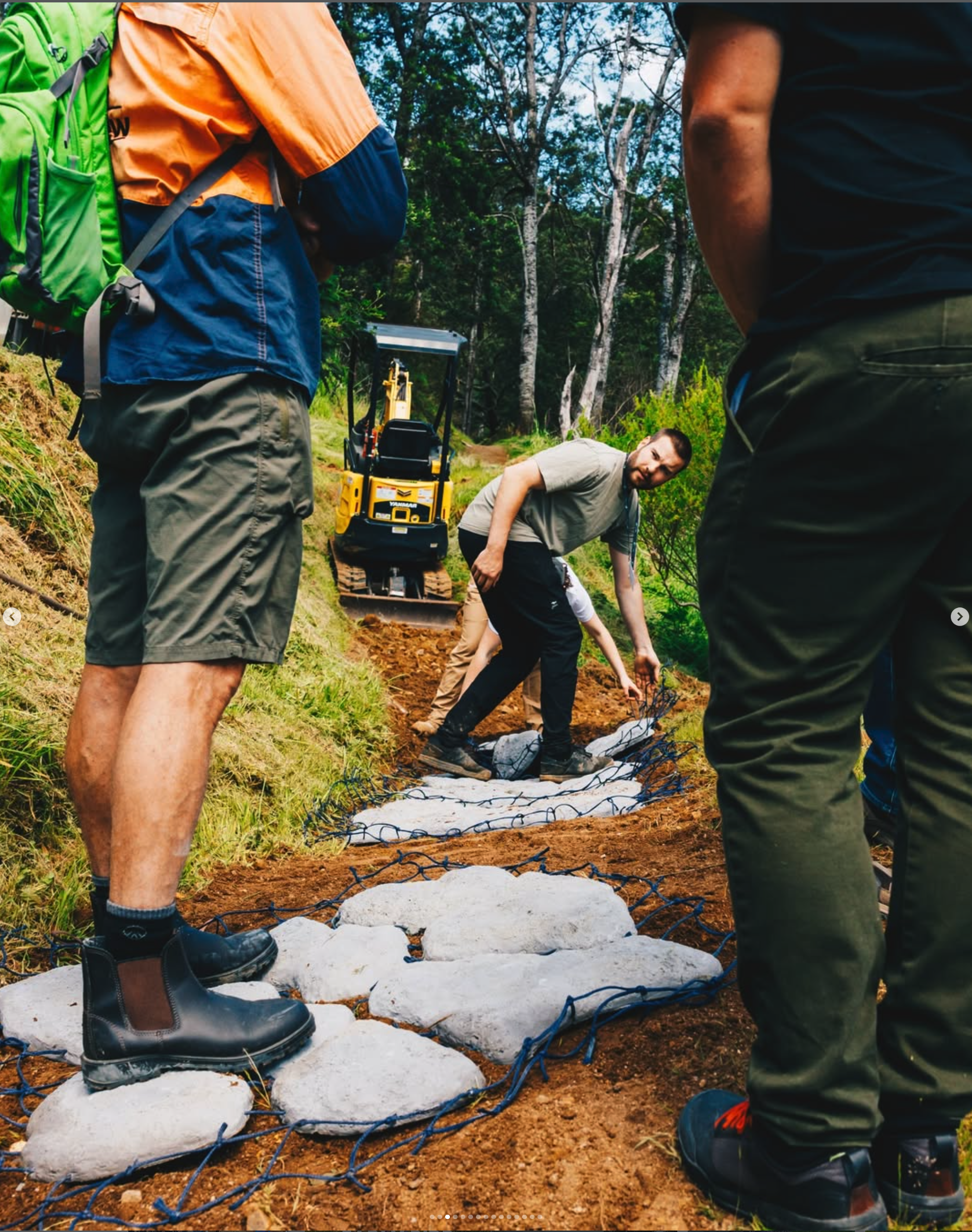
Attendees joined the World Trail’s crew for a hands-on, in-the-field demonstration of the Adjustable Rock Matting (ARM) system. This innovative product provides a flexible and durable solution for stabilizing trail surfaces in challenging environments. Participants will see the installation process step by step, learn about the design considerations that make ARM effective, and get a close look at how professional builders adapt it to different terrain and conditions.
Shaping the Ride: MTB Feature Design in Practice (Bike and Talk)
World Trail Team and/or Dorset Council team
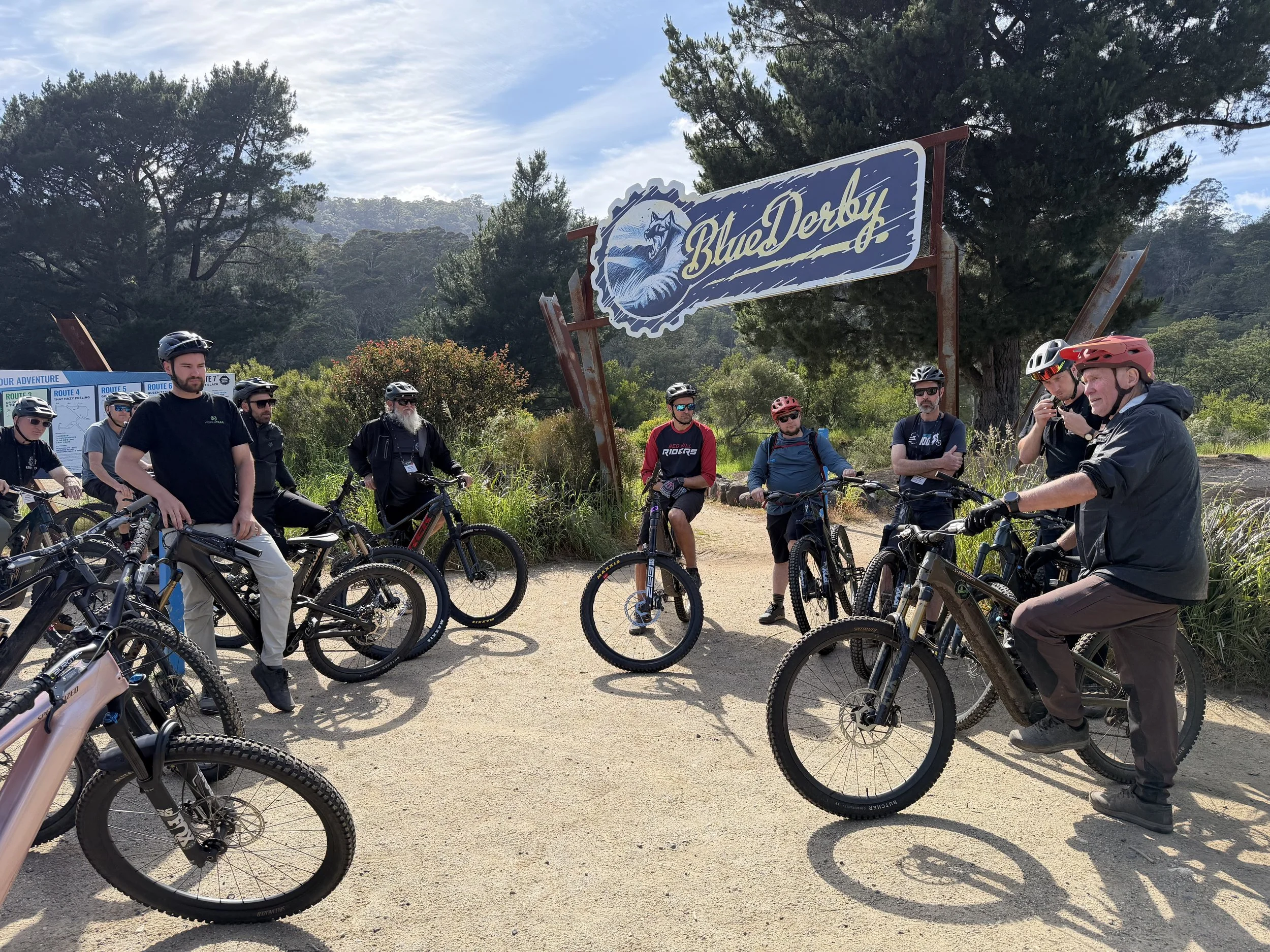
The Blue Derby trail network offers over 125 km of world-class singletrack, showcasing a wide variety of features—from berms, rollers, and spillways to rocky slabs, jumps, and whoops—designed for riders of all skill levels. This guided group ride provided more than just the thrill of the ride: it was a chance to explore the design intent and construction techniques behind each feature.
Breakout Sessions
Trail Competencies & Skill Breakouts: Building a Skilled Trail Global Workforce
Aaryn Kay, PTBA; Millie Wilson, Northwest Arkansas Community College
This session took a deep dive into the updated Trail Competency Framework — a set of clearly defined competencies and skill levels (entry, full, expert) designed to guide professional growth and consistency across the trail industry. The framework spans five key categories: Construction, Maintenance, Project Planning & Design, Crew Leadership, and Program Administration.
Speakers unpacked each category, share the rationale behind the skill level definitions, and discuss how these standards were developed in collaboration with trail industry leaders. This session explores how the competencies provide a common language and clear benchmarks that can shape training programs, guide hiring practices, and create transparent career pathways for both new and seasoned trail professionals.
From Trailhead to Destination: Walk and Talk with World Trail
Gerard McHugh, World Trail
The World Trail staff took attendees through the story of how Derby’s trail vision took shape. This one-hour walk & talk highlighted the unique environmental, community, and design elements that influenced the concept and helped transform it into a globally recognized trail destination.
Planning + Strategy Session: Asia Strategy
Facilitator: HM Lim, Dirtraction
This session explored challenges and opportunities shaping trail development and mountain biking across Asian markets. Participants highlighted persistent barriers including language differences, limited local trail-building workforce capacity, and ongoing stigma around recreational cycling and mountain biking in some countries. Many regions lack in-country contractors, resulting in fly-in builders and project solicitation driven more by advocacy groups or multinational engineering firms than by informed land managers. A focus on one-off races and events often produces short-term venues rather than lasting, sustainable trail systems.
Despite these challenges, notable opportunities emerged. Markets such as Singapore, Hong Kong, and Japan demonstrate the value of repeat projects, clearer planning, and growing technical knowledge. Non-language signage and pictograms offer inclusive communication tools, while education and outreach—through case studies, site visits, and agency engagement—can help land managers better understand trail culture and its community and economic benefits. The session emphasized the need to channel strong grassroots enthusiasm for trail building toward permitted, well-designed, and sustainable outcomes.
Breakout Sessions
Models for Managing and Maintaining Trail Systems
Nick Bowman, Destination Trails; David Prete, Atherton Trails
Building a trail is just the beginning—the real challenge is maintenance and management. This session explored different approaches to maintaining trail systems once construction is complete, including commercial contractors, nonprofit organizations, and government-led models. Nick Bowman discussed the strengths and limitations of each approach, offering real-world examples and lessons learned to help land managers, community leaders, and stakeholders choose the model—or mix of models—that best fits their needs. David Prete talked about the Atherton Trails model, specifically engaging local youth as the maintenance crew.
Building Trail on Indigenous Land
Alkira Aldridge, Eden Local Aboriginal Land Council; Yully Forest, CreativeLines
Designing and building trails on Indigenous land requires more than technical expertise—it demands cultural awareness, respectful engagement, and a clear process that honors Country and community. This session explored strategies, considerations, and common barriers when planning and implementing trail projects in Australia, emphasizing the importance of early consultation, ongoing dialogue, and shared decision-making with Traditional Owners.
Planning Towards an Australian Training Code: ASQA and VET
Australia’s trail industry is at a pivotal moment, with growing recognition of the need for nationally recognized training standards within the ASQA and VET frameworks. While there have been past efforts to create trail-related training codes in Australia, these initiatives have faced challenges in alignment, uptake, and long-term sustainability.
Building on PTBA’s work in the United States developing trail-specific competencies, this session will revisit those earlier attempts, highlight lessons learned, and explore how they can inform a renewed approach. Participants will examine where current competencies and training structures intersect, where gaps remain, and what steps are needed next to move toward an Australian training code that is practical, industry-led, and nationally recognized.

4:30 - 6:00 pm
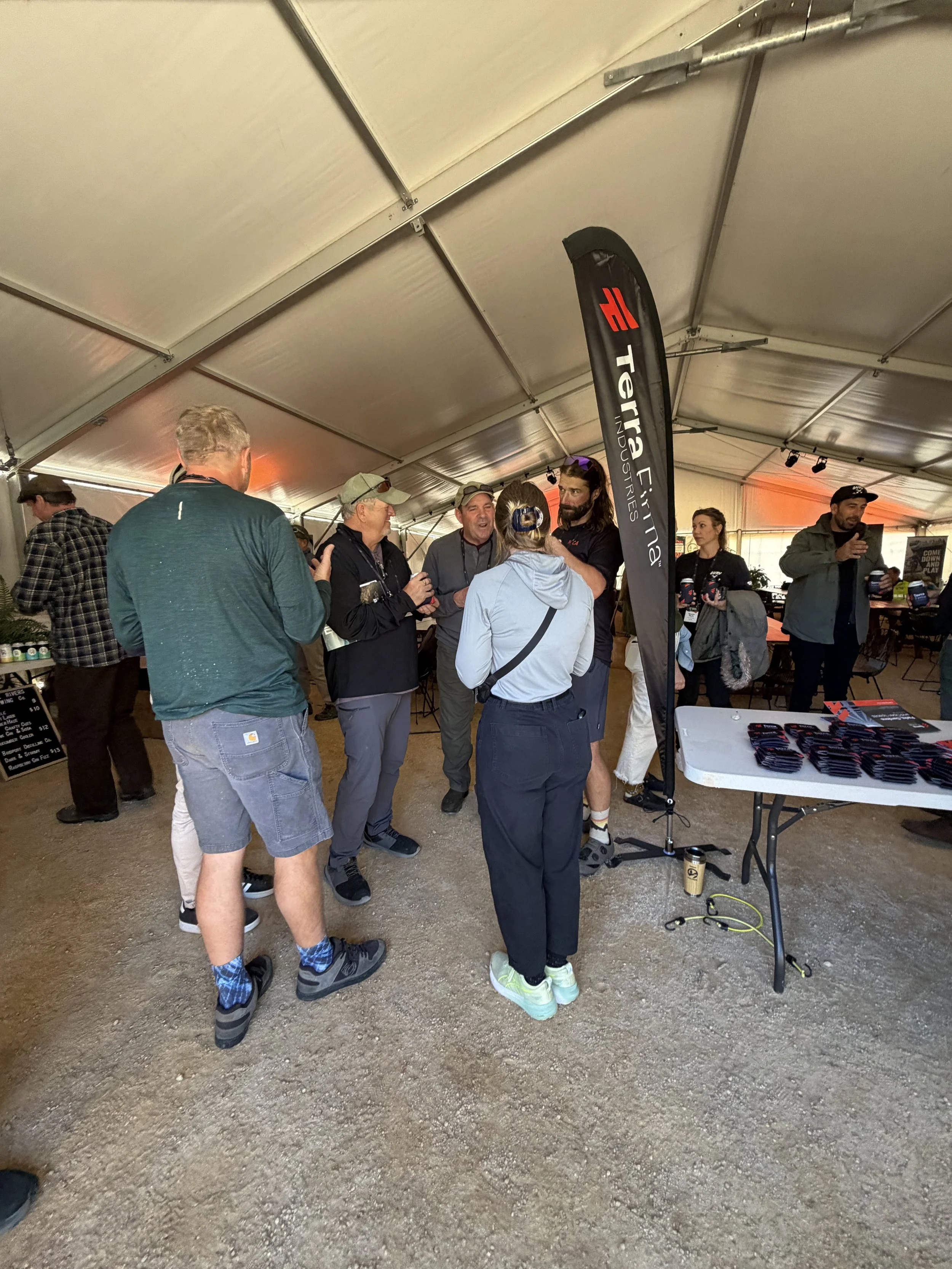
Happy Hour

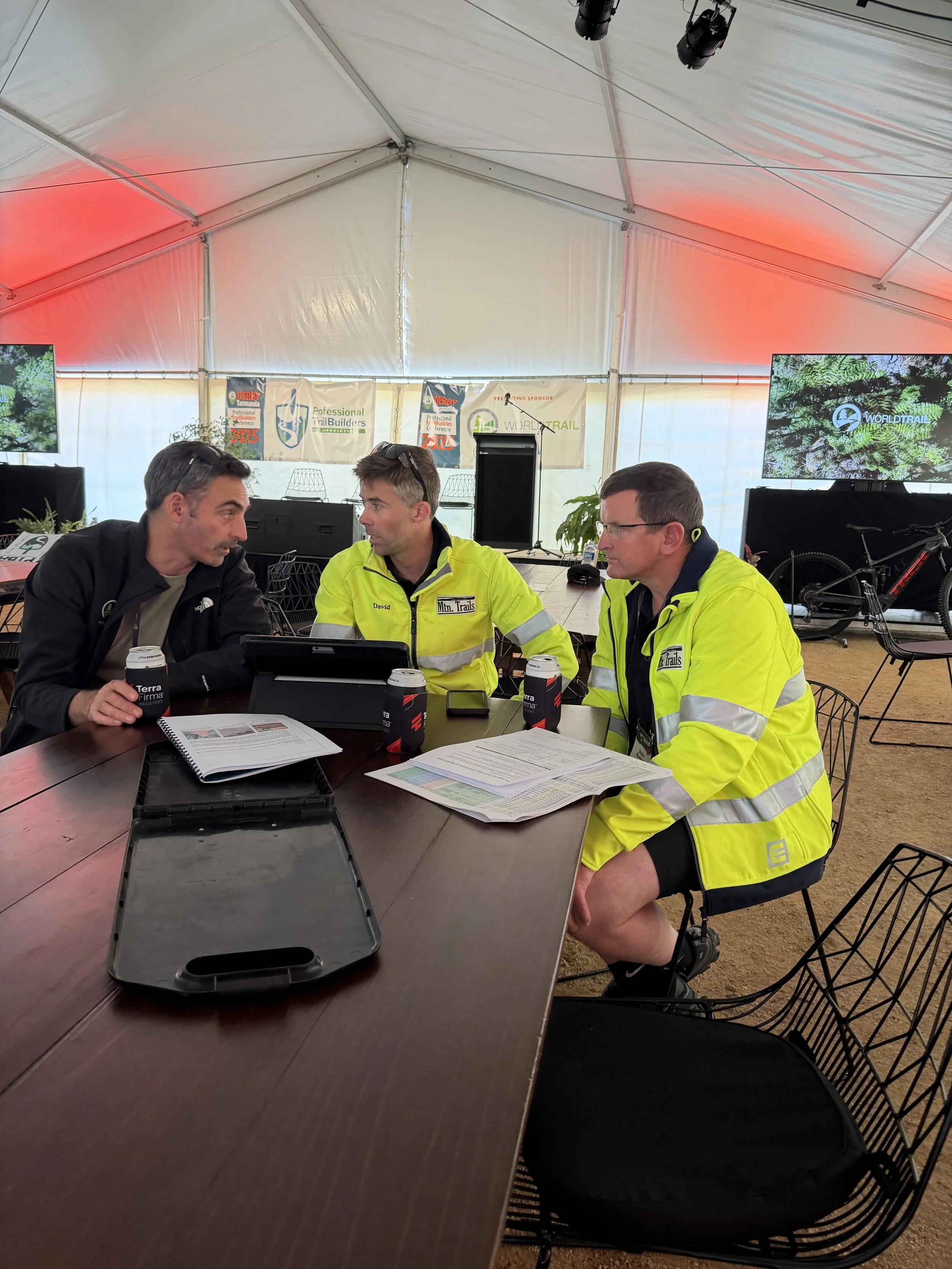
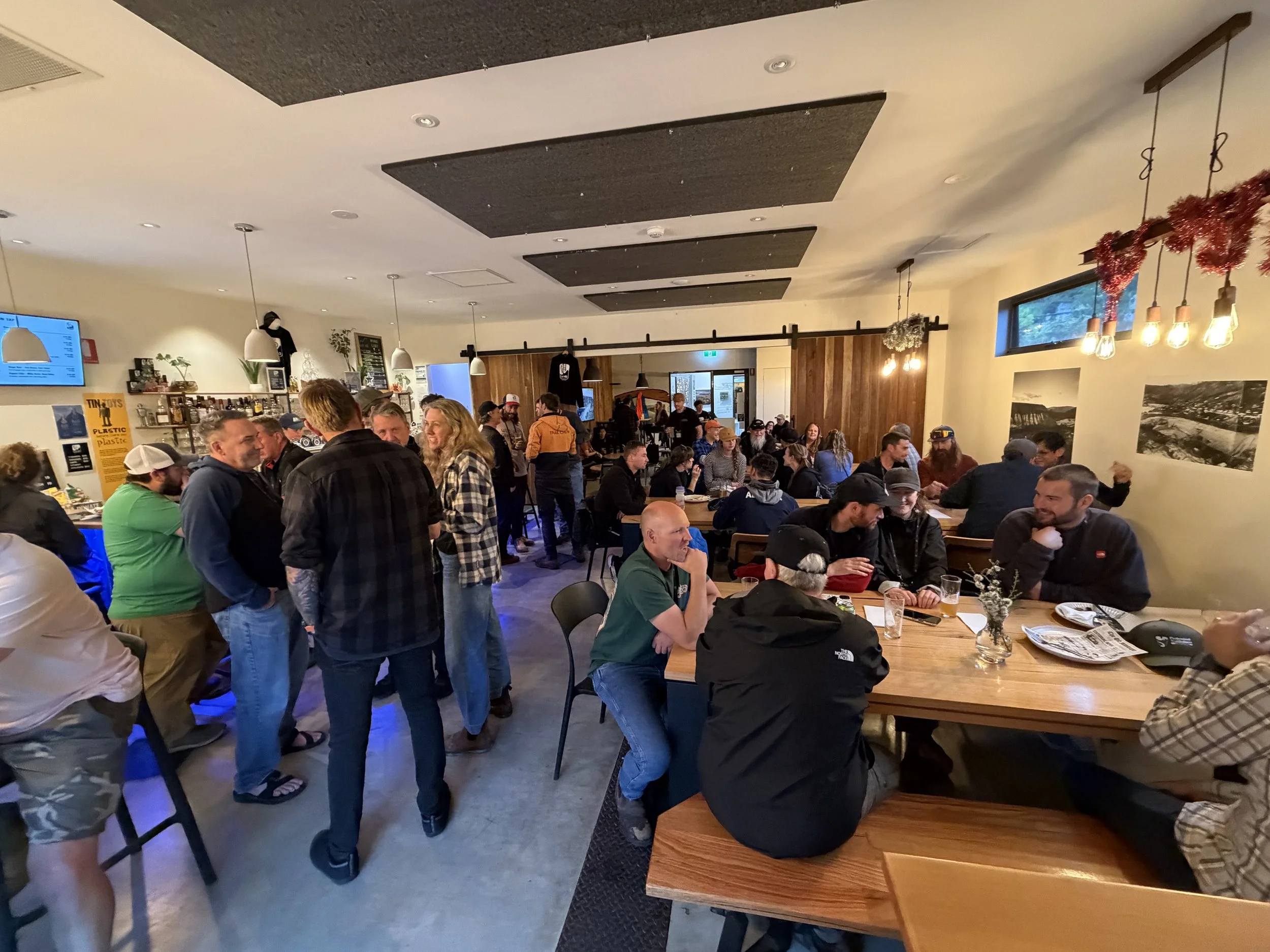
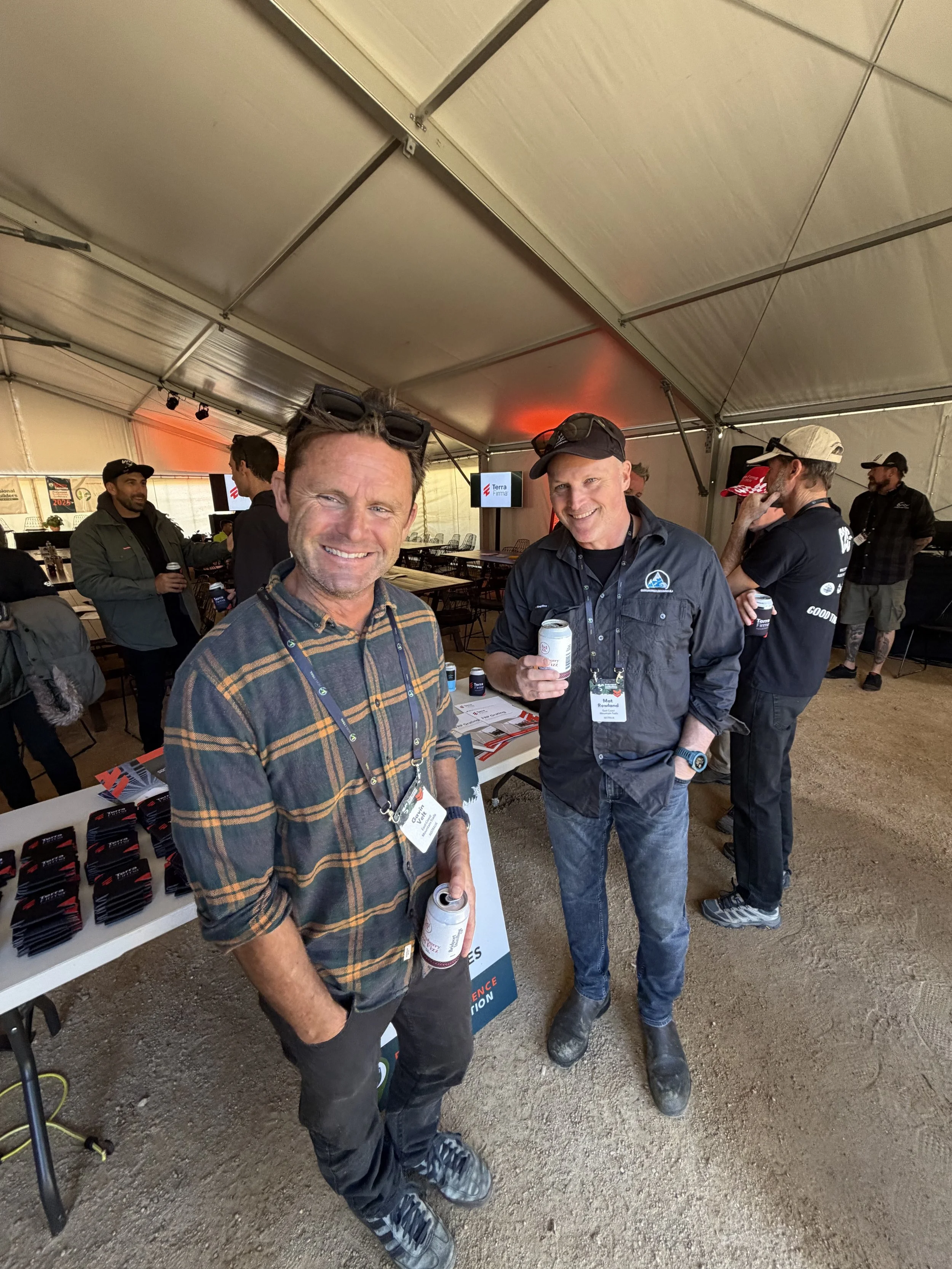
Happy Hour at the Marquee was sponsored by Creative Lines and Terra Firma. Little Rivers Brewing Co. poured their local craft beers.

Wednesday, December 10
Field Sessions
Luxury on the Trails: Inside the Blue Derby Pods Ride Experience
Tara Howell, Blue Derby Pods
Mountain biking and luxury don’t often go hand-in-hand—except in Derby. Blue Derby Pods Ride has redefined what’s possible, creating a nationally acclaimed, multi-day adventure that blends world-class riding with off-grid, sustainable luxury.
In this immersive field session, attendees toured the Pods and Hub buildings nestled in the Derby forests, learn how this unique experience was designed and delivered, and gain insight into the growing market for luxury adventure travel. The session concluded with an open discussion on opportunities, challenges, and the future of high-end trail-based tourism.
Shaping the Ride: MTB Feature Design in Practice (Bike and Talk)
World Trail Team and/or Dorset Council team
The Blue Derby trail network offers over 125 km of world-class singletrack, showcasing a wide variety of features—from berms, rollers, and spillways to rocky slabs, jumps, and whoops—designed for riders of all skill levels. This guided group ride provided more than just the thrill of the ride: it was a chance to explore the design intent and construction techniques behind each feature.
Breakout Sessions
What Does It Really Cost to Build a Trail?
Panel Discussion & Q+A
Beyond the dollars and cents, the true cost of trail construction includes the expertise of professional trailbuilders, the complexity of design and site conditions, and the value created for communities. During this open discussion, panelists shared insights drawn from projects across Australia and around the globe including:
The hidden components that make up the full value of trail construction
Real-world examples of construction costs from diverse landscapes
Why financial planning must be an integral part of trail development
The risks of underestimating costs, including delays and compromised quality
Establishing an Employment Award for Australia’s Trail Construction Industry
Yully Forest, Creativelines Pty Ltd
Australia is undergoing a rapid transformation in trail infrastructure development, with more than $120M in public and private investment annually and a projected $150B adventure tourism sector by 2031. This session addressed the growing demand for a regulated, skilled workforce in trail construction by proposing the development of an industry-specific Employment Award.
Drawing on project case studies across both MTB and walking trail sectors—from Blue Derby to Gravity Eden, and from the Snowies Iconic Walk to the Tomaree Coastal Walk—the session highlighted the scale of growth, emerging career opportunities, the future of industry certification, and the risks of continuing without formal wage and safety standards. It also introduced a proposal for a national audit model to define job classifications, benchmark wages, and guide the development of a Fair Work Commission submission, with a call for collaboration across the sector.
Strategy Session: Women in Trailbuilding: Breaking Barriers, Building Impact
Amelia (Millie) Cafe, World Trail; Emily Pearce, World Trail; Teagan Walker, World Trail; Christine Byl, Interior Trails
Women are playing pivotal roles across every corner of the trail industry—from executive leadership and landscape architecture to on-the-ground construction, logistics, and project management. Yet barriers remain, and the opportunity to maximize the impact of women in the field has never been greater.
In this strategy-focused session, a panel of women leaders brought their perspectives from across the profession to identify challenges, share pathways for success, and chart a collaborative vision to move beyond inspiration into actionable strategies that strengthen the workforce and open doors for the next generation.
Breakout Sessions
Behaviour by Design: Trail Use for Walkers and Mountain Bikers
Dr Leah Stevenson, Progress Village
This presentation is based on a research study exploring how trail design influences the environmental impacts of walkers, mountain bikers, and users of multi-use trails. Using time-series photographic observations over 12 months, it identifies how specific trail features shape user behaviour and associated impacts. Common issues include shortcutting, trail widening, and trail-edge erosion, especially where design does not align with user needs or behaviour. Impacts were assessed using mountain biking and walking trail building design guidelines. Findings highlight the need for context-specific design solutions in shared-use environments. The presentation offers practical recommendations to improve sustainability and minimise unintended impacts through environmentally responsive trail design for walking and mountain biking networks.
From the Ground Up: Building a MTB Park with Purpose
Ben Reeves, Omeo MTB Parks; Jason Lam, Common Ground Trail Builders
This presentation will walk attendees through the rollercoaster journey of bringing a building style not often seen in Australian MTB parks to life—from early concept and stakeholder buy-in, to the real-world negotiations between trail builder vision and council risk frameworks. It’s a candid look at the hurdles, frustrations, and breakthroughs that come with building with a non-traditional lens, and a showcase of what’s possible when collaboration meets determination.
Planning + Strategy Session
Building the Path Forward: Strategy Session on an Employment Award for Australia’s Trail Industry
Facilitator: Yully Forest, Creativelines Pty Ltd
Following the presentation on the proposal for an industry-specific Employment Award, this planning and strategy session will bring stakeholders together to dig deeper into the details and chart next steps. Participants will review key elements of the proposed national audit model—job classifications, wage benchmarks, and safety standards—while identifying gaps, priorities, and opportunities for sector-wide alignment.
The session will also focus on defining roles for industry, government, and training providers in shaping a Fair Work Commission submission, and building the collaborative framework needed to advance it. Designed as a working conversation, this session will ensure momentum continues beyond the conference, with practical outcomes and commitments to drive the creation of a formal Employment Award for Australia’s trail construction workforce.
Field Sessions
Rebuilding Derby’s Landslip-Damaged Trails
David Hugo, Pitt & Sherry; Ernie Harvey, AW Harvey Transport & Excavations
In October 2022, an intense rainfall event triggered a major landslip in Derby, wiping out access to three key trails. Within six months—just in time for the 2023 EDR World Cup—the first stage of repairs was complete, and a year later, the trails fully reopened. Attendees joined the engineer and contractor on-site as they shared the challenges, engineering solutions, and teamwork behind this remarkable recovery. This session also explored strategies for preparing trail networks for the “unexpected” weather events that now arrive every 2–3 years—from floods to windstorms—and how to get back on track fast.
Shaping the Ride: MTB Feature Design in Practice (Ride or Walk & Talk)
Led by: World Trail Team and/or Dorset Council team
The Blue Derby trail network offers over 125 km of world-class singletrack, showcasing a wide variety of features—from berms, rollers, and spillways to rocky slabs, jumps, and whoops—designed for riders of all skill levels. This guided group ride provided more than just the thrill of the ride: it was a chance to explore the design intent and construction techniques behind each feature.
Breakout Sessions
Economic Analysis of Mountain Biking in Tasmania
Tara Howell, Mountain Bike Network Tasmania
Over the last decade, mountain biking in Tasmania has boomed. The Mountain Bike Network – Tasmania is the peak industry body representing the sport across the state. In 2025, with funding from the Tasmanian Government, we conducted an economic analysis of mountain biking in Tasmania—and the results are incredible. This presentation will dive into those findings, demonstrating just how powerful mountain biking is for people, communities, towns, and destinations alike.
Managing and Maintaining the Derby Trails
Pete Coleborn, Dorset Council
Behind the success of the Blue Derby trail network is a comprehensive system of management and maintenance that keeps over 125 km of singletrack safe, sustainable, and ready to ride. In this session, Pete Coleborn of Dorset Council will share how the team approaches detailed planning, monitoring, and scheduling to meet the demands of a world-class trail system.
From long-term asset management plans to day-to-day inspections and repairs, participants will gain an inside look at the processes, tools, and strategies that balance rider experience, environmental sustainability, and operational efficiency. This session will highlight not only the challenges of maintaining such an iconic network, but also the collaborative solutions that ensure Derby remains a global destination for mountain biking.
Roundtable Discussion
MTB Trail Difficulty Ratings in Australia
Nick Bowman, Destination Trails; Kain Gardner, Open Trails; Jack Rahilly, Advanced Trail Design
Trail difficulty ratings need to strike a balance—objective enough to provide consistency, yet flexible enough to reflect local landscapes, topography, trail culture, and land management requirements. This lively roundtable dived into the nuances of how trail difficulty is assessed in Australia, while also comparing the AusCycling (2023), IMBA (2004), and New Zealand trail rating systems. Many attendees joined this conversation to share perspectives, challenges, and ideas for shaping a framework that works across diverse contexts - and the conversations went well beyond the session and into lunch and happy hour.
Breakout Sessions
Urban Bike Parks: Best Practices in Design, Planning, and Construction
Jason Lam, Common Ground Trails; HM Lim, Dirtraction
Urban bike parks and pump tracks are transforming compact city spaces into vibrant hubs for recreation and community. This session explores best practices in planning, design and construction. Speakers will compare asphalt and dirt track approaches and highlights emerging global trends. Speakers from Australia and Asia will share real-world lessons and innovative examples shaping the next generation of urban riding spaces.
Trail to Office to Trail - GIS in Trail Planning
Jon Altschuld, Chinook Landscape Architecture
This session will look at how various GIS software and tools have been used on real world trail projects for site assessment, planning, and design tasks. Tools covered will include field collection apps (OnX, Avenza, Survey123, etc.), desktop GIS (mainly QGIS, with some ESRI), and online webGIS for collaboration and presentation (ESRI). The session will also go through workflows to move data between all of these tools efficiently and to maximize usable data. Presentation will be a digital slideshow combined with working live in various softwares, with Q&A throughout and at the end. This session will also showcase unique GIS software that Chinook has developed specifically for Trails Planning and Assessment workflows.
Planning + Strategy Session
Global Best Practices for a Stronger Trail Industry?
Facilitator: Scott Linnenburger, Kay-Linn Enterprises
PTBA has long championed quality and professionalism, and now the conversation is expanding: could the industry benefit from a shared set of global best practices? Building on multiple models and discussions, this strategy session will take a deeper dive into the question of global best practices for the trail industry. This strategy session will look at existing models and explore how they might inform a broader international framework.
Open to all delegates, this session invites trailbuilders, land managers, advocates, and partners to join PTBA in weighing the opportunities and challenges of a global versus regional approach. Together, we’ll map what’s out there now, identify gaps, and consider how a collaborative vision for best practices could strengthen the trail industry worldwide.
Thursday, December 11
Closing Sessions
Beyond Derby: Diverse Models of Community Development Through Trails
Speakers: HM Lim, Dirtraction; Jordan Virgil, Common Ground Trails; Ben Reeves, Omeo MTB Parks; Peter Mills, Elevated Trail Design; Jon Altschuld, Chinook Landscape Architecture.
From small rural towns to urban centers and former extraction communities, trails are reshaping economies, identities, and futures. But if there’s one lesson we’ve learned from Derby, it’s that there is no single blueprint for success.
In this plenary, speakers from around the world shared powerful stories and models of community development through trails—each highlighting different approaches to management, marketing and branding, community outreach, and long-term goals. From regions rebuilding after industry decline to cities investing in active transportation and recreation, this panel showcased a diversity of strategies that have worked—and sometimes failed—while sparking new ideas for what could be possible in your own community.
The Future of Trails – From Strategy to Action
Speakers: Aaryn Kay, PTBA; Glen Jacobs, World Trail
As the conference comes to a close, this town hall style session wove together the outcomes of the week’s planning and strategy discussions and look ahead to what’s next for the global trail industry. Throughout the conference, delegates will have explored critical questions around training and workforce development, employment standards, trail rating systems, and the potential for shared best practices across borders.
The goal is that these outcomes become a strategy: to transform conversations into collaboration, strategies into outcomes, and shared passion into a stronger, more professional, and more connected trail industry worldwide.
Thank you to our Sponsors!

Presenting Sponsor
Special Event Sponsors

Supporting Sponsors